
Explore the stories, technologies and achievements that make Tempur-Pedic® the most highly recommended mattress brand in America*.
Explore the stories, technologies and achievements that make Tempur-Pedic® the most highly recommended mattress brand in America*.
— by Tempur-Pedic on Oct 21, 2026
If you sleep with a partner, motion isolation can be crucial for a great night’s rest. Tempur-Pedic®'s proprietary TEMPUR-Material® features a viscoelastic, open cell structure designed to provide pressure relief and motion isolation, making it an excellent component for life-changing sleep products.
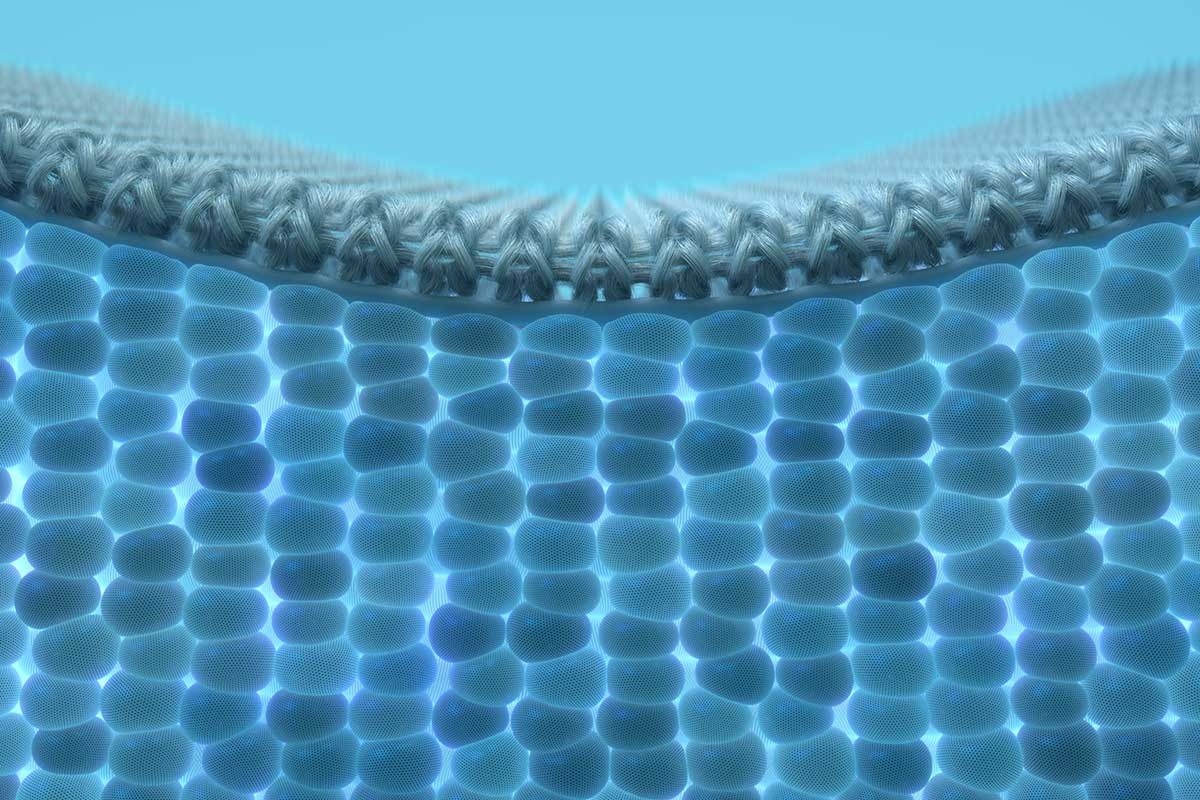
The open cell structure of TEMPUR-Material® means the cells are not fully enclosed. This can help with durability so that the material isn’t damaged by compression as you use your bed, but it serves an additional purpose. With a typically “squishier” feel, open cell structures are often used for cushioning and shock and vibration management (American Converters, 2023, and American Flexible Products, accessed October 2026.) Certain open-cell foams, including memory foams, can exhibit viscoelastic properties that contribute to pressure relief and motion isolation.
Viscoelastic foams exhibit elastic and viscous properties — meaning they react slowly to stress and gradually return to their original shape when pressure is taken away. The slow response is a key contributor to motion isolation because it helps absorb and dissipate energy rather than transmitting it across the sleep surface. High elasticity would indicate a substance that “bounces” back, which is more prone to shock and motion transfer while a fully viscous material is formless (a thick liquid). The balance is what absorbs motion while retaining shape, making viscoelastic foam particularly well suited for sleep products (Sorothane Inc., accessed October 2026).
With origins in advanced foam technologies later adapted and refined for sleep, TEMPUR-Material® delivers exceptional motion isolation. Its combination of viscoelastic properties and an open-cell structure help absorb and dissipate movement rather than transferring it across the mattress, contributing to the outstanding motion isolation for which Tempur-Pedic® is known.
A Note from Tempur-Pedic®: We love sharing tips to help you achieve better sleep. While we strive to provide objective, industry-standard insights, we also design and manufacture products to address specific sleep challenges.
No mattress can eliminate all movement, but strong motion isolation can significantly reduce how much movement is transferred across the sleep surface. TEMPUR-Material® is designed to absorb and dissipate energy, helping minimize disturbances caused by a partner changing positions or getting in and out of bed.
Motion isolation and pressure relief are related but distinct benefits. Motion isolation helps limit the transfer of movement across the mattress, while pressure relief helps distribute weight more evenly and reduce pressure points at areas like the shoulders, hips, and back.
Not necessarily. Motion isolation can vary based on foam formulation, density, construction, and overall mattress design. TEMPUR-Material® was specifically developed to adapt to the body while helping absorb and dissipate movement.
When one sleeper moves, changes positions, or gets out of bed, motion can transfer across the mattress and potentially disturb their partner. Mattresses with strong motion isolation are often preferred by couples because they can help support more uninterrupted sleep.
Materials that quickly rebound can transfer more energy across a mattress surface. Viscoelastic materials respond more gradually to pressure, which can help absorb movement rather than allowing it to travel across the bed.
Motion isolation is most discussed for couples, but it can also contribute to a more stable sleep surface for individual sleepers by helping absorb movement and reduce vibrations.
Many sleepers seek mattresses with strong motion isolation when their partner frequently changes positions during the night. By reducing motion transfer, these mattresses can help create a less disruptive sleep environment.
“What are the Benefits of Open Cell Foams?” August 7, 2023. Published by American Converters Inc. Read Article. Full URL: https://amconfoam.com/what-are-the-benefits-of-open-cell-foams American Converters Inc. provides an overview of open-cell foam construction and highlights the material properties that make it well suited for cushioning, comfort, and pressure-relieving applications.
“Cell Structure, Sealing Effectiveness, and Open vs. Closed Cell Materials.” Accessed October 2026. Published by American Flexible Products. Read Article. Full URL: https://americanflexible.com/cell-structure-sealing-effectiveness-and-open-vs-closed-cell-materials American Flexible Products explains the structure of open and closed cell materials and compares their uses.
“What is Viscoelastic Material?” Accessed October 2026. Published by Sorbothane Inc. Read Article. Full URL: https://www.sorbothane.com/technical-data/articles/what-is-viscoelastic-material Sorbothane Inc. explains the properties of viscoelastic materials, their history, and their uses.
You’re using an unsupported web browser.
A list of the most popular browsers can be found below. Just click on an icon to visit the download page.
Your phone or tablet is using software unsupported by our website. To improve your shopping experience, please update your device to the latest version of iOS or Android OS.


