
Explore the stories, technologies and achievements that make Tempur-Pedic® the most highly recommended mattress brand in America*.
Explore the stories, technologies and achievements that make Tempur-Pedic® the most highly recommended mattress brand in America*.
— by Tempur-Pedic on Jun 5, 2026
Sleep’s influence on our lives is undeniable, whether we reference studies published across the globe or opinion posts from wellness influencers throughout social media. Evidence suggests that humans have chased great sleep and marveled at the meaning of dreams since our earliest ancestors painted pictures of themselves on caveside walls. In the last two centuries, both intellectual progress and technological advancements have been historically tied to life-improving pursuits — impacting our sleep quality and patterns in exciting, but sometimes surprising, ways.
The Unexpected Price of Artificial Light
Dating back to antiquity, many populations practiced biphasic sleep – or to describe it more simply, two separate sleeps per night. Recorded accounts tell us that the first sleep started from approximately 8 or 9 pm (or earlier according to the sunset) and lasted until roughly 11 pm. From the Roman Empire to Medieval England, tired residents would “hit the hay” (literally, most slept on sacks filled with hay or other materials as a makeshift mattress) and doze off. They’d naturally wake up a few hours later and carry out normal chores or tasks around the home: poke at the fire, enjoy a snack, tend to animals, read by candlelight, or even pray. Then, around 1 or 2 am, they’d return to bed until dawn. (BBC Future, Jan. 7, 2022) This approach had its benefits; modern studies have shown that biphasic sleep can increase cognitive function, reduce the need for naps and even help improve memory recall. (Scientific Reports, vol. 11, no. 5275, Mar. 5, 2021)
In 1816, Baltimore became the first city in the U.S. to be lit by gas. Suddenly, staying out after dark was an enjoyable and desirable luxury, edging bedtimes later and nudging sleep practices closer to what we consider the norm today. Eventually gas light turned into electric light across the country, and illumination that once only flooded city streets began to fill every American home. (HISTORY, Jul. 29, 2025)
As electricity became increasingly commonplace in the early 20th century, nighttime habits continued to shift. Even more so than with the gas lamps that proceeded it, electric light stimulates neural activity in the brain and suppresses melatonin, allowing us to enjoy a longer waking time but also warding off tiredness.
As the inventor of the mass-produced incandescent bulb, Thomas Edison was vocal in his lifetime about his opinion of sleep (he felt it was a waste of valuable time) and rarely slept more than four hours per night. However, he also frequently used napping and the semi-conscious state right before drifting off to help harness creativity and problem solve, punctuating the unmistakable connection between the act of sleeping and the highly active brain. (Scientific American, Dec. 2021)
Widespread electricity brought with it the Industrial Revolution, and biphasic sleep in the US and across the world officially became a practice of the past. The formal workday structure of factory life meant hours spent awake in the middle of the night were no longer feasible, and the standardization of school attendance during this time did not lend itself to a two-sleep approach. Insomnia had also been officially identified as a disorder, “signaling the end of the era for segmented sleep,” despite science suggesting that the biphasic approach is closer to our natural sleep cycle. (Scientific American, Dec. 2021)
CPAP Machines & Sleep-Saving Medical Treatments
In the 1960s and 1970s, as research revealed more about the brain’s activity during sleep and the importance of Rapid Eye Movement (REM) in dreaming, medical practices for identifying and treating sleep-related issues like narcolepsy, sleep apnea and insomnia began to offer relief.
The single most important technology in sleep medicine – and one of the most significant scientific advances of the 20th century – was invented in 1980 by Australian physician and professor Dr. Colin Sullivan. The creation of the Continuous Positive Airway Pressure (CPAP) machine saved lives and helped propel the popularity of sleep research and therapies. Prior to the 1970s, it was still unknown that millions of adults had problems breathing during sleep due to sleep apnea. (University of Sydney News & Opinion, Mar. 16, 2018)
According to the NIH, sleep apnea is defined as a “common condition that occurs when your breathing stops and restarts many times while you sleep.” As of 2025, it’s estimated that 50 to 70 million Americans alone have this disorder. In addition to low quality sleep, if left untreated, sleep apnea can cause confusion and increase the risk for stroke and heart attacks — and even lead to death in extreme cases. The two types of sleep apnea are obstructive (when the upper airway is blocked many times) and central (when the brain doesn’t send the signals needed to breathe) during sleep. (NIH, last updated Jan. 9, 2025)
CPAP machines help treat sleep apnea by delivering continuous airflow through the mouth and nose to keep airways open. Over the years, the machines themselves have become smaller and quieter. During use, a CPAP machine pulls in air from the room and then filters and pressurizes it. Next, it delivers the air through the attached tube and mask. The continuous airflow stabilizes breathing for the user and helps prevent frequent wakeups during sleep. (Cleveland Clinic Health Library, last updated Jul. 11, 2024)
NASA Launches Pressure-Relieving “Slow Spring-Back” Material
Research has long proven that great sleep helps contribute to a healthier lifestyle, and all-night comfort is an essential component to achieve the best rest. In the 1960s, while working to solve the unrelated issue of easing pilot discomfort during test missions, NASA scientists created a groundbreaking “slow spring-back” material. This new viscoelastic technology slowly conforms to a person’s body weight, shape, and temperature. Adaptive, pressure relieving and high-energy absorbing, the material was used in the cushions of experimental aircrafts and space shuttles —providing long-lasting relief during lengthy flights.
When the formula for this revolutionary material was made public by NASA in the 1980s, two Swedish entrepreneurs saw its potential for helping improve sleep and went to work perfecting the formulation for mattresses and pillows. A decade later — in 1991 — the first viscoelastic sleep products were sold under the brand name TEMPUR® in the United States, transforming the way that millions of people sleep. While TEMPUR-Material® has evolved over time with the addition of cooling technologies and more advanced pressure-relieving properties, the improvements were built upon NASA’s proprietary original technology and are only available in Tempur-Pedic’s exclusive product assortment. TEMPUR-Material® was inducted into the Space Technology Hall of Fame in 1998 for “improving the quality of life for humankind” and is also classified as a Certified Space Technology. (Space Technology Hall of Fame, Nov. 3, 2017)
Studies Illuminate Reducing Blue Light Exposure Before Bedtime
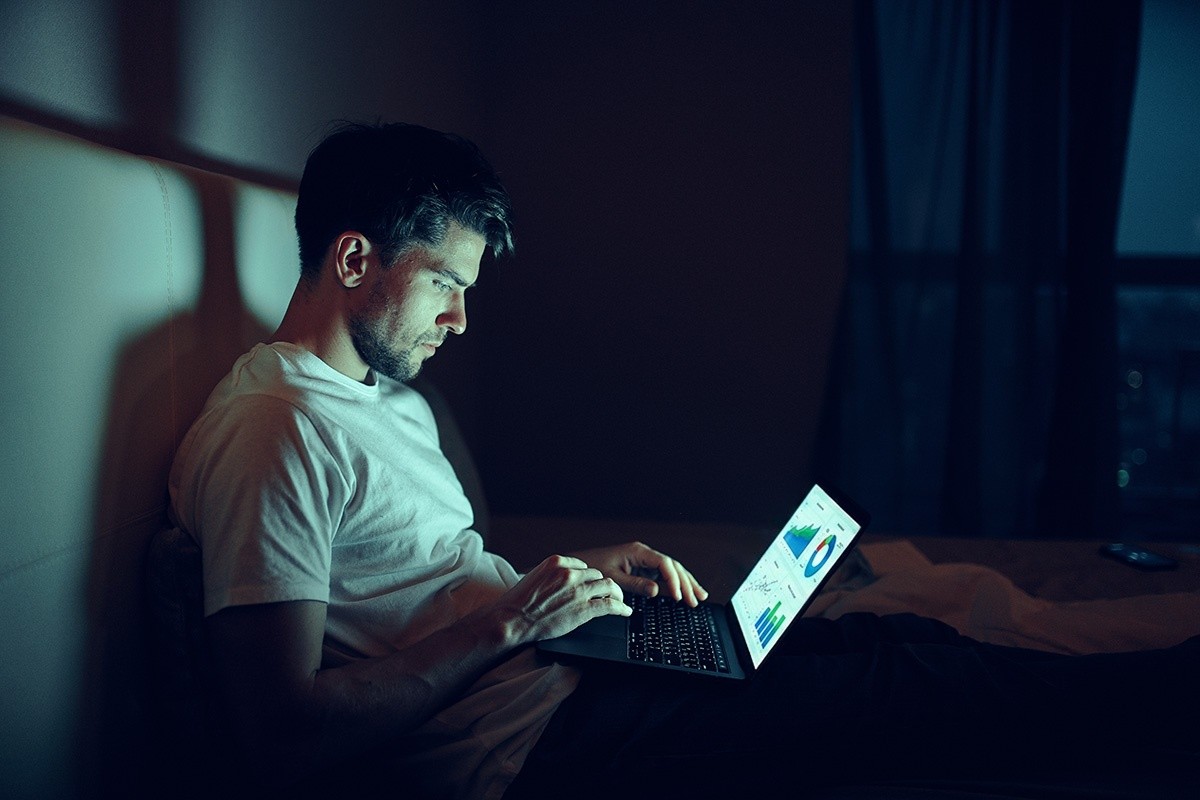
Smart devices — including wearables and Sleeptracker-AI® technology — have helped many across the world track, understand and improve their sleep. However, just as gas lamps and incandescent bulbs changed the way our ancestors slept, technologies in the last decade have also influenced sleep quality. Perhaps nothing has affected this more than the blue light emitted by LED televisions, laptops, computers, smartphones, tablets, and more. A study published in 2020 found that “children who spend more time on screens have more trouble sleeping, while children who spend less time looking at screens each day fall asleep more quickly, sleep longer, have fewer sleep disturbances and insomnia symptoms, and are less sleepy during the day.” As a result of this study and others, the National Sleep Foundation advised that limiting screen usage in the evening contributes to better sleep health for both children and adults. (National Sleep Foundation, Dec. 1, 2020)
Scientifically speaking, the shorter wavelengths of blue light cause increased wakefulness compared to the warmer tones in the visible light spectrum (for example, a warm incandescent glow is less disruptive than cooler LED and fluorescent lighting). The circadian rhythm of your body works together with natural daylight to help you feel alert in the morning. When the sun sets, your body produces melatonin that induces sleep. However, exposure to blue light at night tricks your brain into thinking it’s still earlier in the day, inhibiting melatonin production and sleepiness. (National Sleep Foundation, Mar. 13, 2022)
Additionally, interacting with blue-light producing devices (whether you’re scrolling on social media, playing a game, or messaging friends) further stimulates brain activity and prevents relaxation. Creating a distraction-free space and limiting device use for several hours before bedtime can help improve your body’s ability to power down for the rest it needs to recharge overnight. (National Sleep Foundation, Mar. 13, 2022)
Taking advantage of relaxation apps like Calm, as well as available sleep-tracking and automatic snore-reducing tools, can also help counteract the negative effects of ever-changing technologies in our daily lives.
What is biphasic sleep?
Biphasic sleep is the practice of splitting nighttime rest into two separate sleep periods, separated by a period of wakefulness. From the Roman Empire through Medieval England, many populations followed this pattern — falling asleep around 8 or 9 pm, waking around 11 pm to tend to chores, pray, or read by candlelight, and then returning to bed around 1 or 2 am until dawn. Research published in Scientific Reports (2021) found that splitting sleep between nighttime rest and a daytime nap can enhance long-term memory and reduce homeostatic sleep pressure. The practice largely disappeared with the rise of artificial lighting and the Industrial Revolution, which standardized the consolidated eight-hour sleep cycle we follow today.
How did artificial light change human sleep patterns?
The introduction of artificial light fundamentally transformed human sleep from a biphasic to a monophasic pattern. In 1816, Baltimore became the first U.S. city lit by gas, making it desirable to stay out after dark and pushing bedtimes later. As gas light gave way to electric light in the late 19th and early 20th centuries, the shift accelerated — electric light stimulates neural activity and suppresses melatonin, extending wakefulness. Combined with the rigid schedules of the Industrial Revolution and compulsory schooling, artificial light helped standardize the consolidated overnight sleep pattern that most people follow today.
What is a CPAP machine and how does it work?
A CPAP (Continuous Positive Airway Pressure) machine is a medical device that treats sleep apnea by delivering a steady stream of filtered, pressurized air through a tube and mask to keep the user's airways open during sleep. Invented in 1980 by Australian physician Dr. Colin Sullivan at the University of Sydney, CPAP machines pull air from the room, filter and pressurize it, and deliver it continuously to prevent the airway collapses that cause breathing interruptions. Over the decades, CPAP machines have become smaller and quieter. According to the Cleveland Clinic, benefits include improved sleep quality, reduced snoring, and lower cardiovascular disease risk.
What is sleep apnea?
Sleep apnea is a common condition in which breathing repeatedly stops and restarts during sleep. According to the National Heart, Lung, and Blood Institute (NHLBI), an estimated 50 to 70 million Americans have a sleep disorder, with sleep apnea among the most prevalent. There are two types: obstructive sleep apnea, where the upper airway is physically blocked, and central sleep apnea, where the brain fails to send proper breathing signals. If left untreated, sleep apnea can lead to low-quality sleep, confusion, increased risk for stroke and heart attacks, and in extreme cases, death. CPAP machines are the most common and effective treatment.
How was TEMPUR-Material® developed from NASA technology?
TEMPUR-Material® originated from viscoelastic "slow spring-back" foam developed by NASA scientists in the 1960s to cushion pilots during test flights and space shuttle missions. The material slowly conforms to a person's body weight, shape, and temperature, providing adaptive pressure relief and high energy absorption. After NASA made the formula public in the 1980s, two Swedish entrepreneurs perfected it for sleep products, and the first TEMPUR® mattresses and pillows were sold in the United States in 1991. TEMPUR-Material® was inducted into the Space Technology Hall of Fame in 1998 for "improving the quality of life for humankind" and is classified as a Certified Space Technology. It is exclusively available in Tempur-Pedic products.
Does blue light from screens affect sleep?
Yes — blue light from LED televisions, laptops, smartphones, and tablets suppresses melatonin production and disrupts the body's circadian rhythm. The shorter wavelengths of blue light signal wakefulness to the brain, tricking it into thinking it's still daytime and inhibiting the natural onset of sleepiness. A 2020 study highlighted by the National Sleep Foundation found that children with more screen time had more trouble sleeping, while those with less screen time fell asleep faster, slept longer, and experienced fewer sleep disturbances. The NSF's 2022 Sleep in America® Poll found that 58% of Americans look at screens within one hour of bedtime. Experts recommend limiting screen use for several hours before bed and creating a distraction-free sleep environment.
What are some tips to reduce the impact of technology on sleep?
To minimize technology's negative effects on sleep, experts recommend several strategies: limit screen use on phones, tablets, and laptops for at least one to two hours before bedtime to reduce blue light exposure; create a distraction-free bedroom environment by removing or silencing devices; use warm-toned or "night mode" lighting in the evening instead of cool LED or fluorescent lights; take advantage of sleep-tracking tools and relaxation apps like Calm to monitor and improve sleep quality; and consider investing in pressure-relieving sleep products designed for all-night comfort. These steps help your body's natural melatonin production and circadian rhythm function properly.
Sources:
Gorvett, Zaria. "The Forgotten Medieval Habit of 'Two Sleeps'." BBC Future, January 7, 2022. https://www.bbc.com/future/article/20220107-the-lost-medieval-habit-of-biphasic-sleep — BBC Future explores historian Roger Ekirch's research into biphasic sleep, documenting how populations from the Roman Empire to Medieval England practiced two separate sleep periods per night, separated by a period of wakefulness known as "the watch."
Cousins, James N.; Leong, Ruth L.F.; Jamaluddin, S. Azrin; Ng, Alyssa S.C.; Ong, Ju Lynn; Chee, Michael W.L. "Splitting Sleep Between the Night and a Daytime Nap Reduces Homeostatic Sleep Pressure and Enhances Long-Term Memory." Scientific Reports, vol. 11, no. 5275, March 5, 2021. Published by Nature Publishing Group. PMC ID: PMC7935993. https://pmc.ncbi.nlm.nih.gov/articles/PMC7935993 — This peer-reviewed study of 112 adolescents found that splitting sleep between nocturnal sleep and a 90-minute afternoon nap significantly enhanced afternoon memory encoding and factual knowledge retention, regardless of total sleep duration.
Petrzela, Natalia Mehlman. "The Modern Origins of the 8-Hour Sleep Cycle." HISTORY (A&E Television Networks), July 29, 2025. https://www.history.com/articles/human-sleep-cycle-origins — Historian and New School associate professor Natalia Mehlman Petrzela examines how the advent of gas lighting (Baltimore, 1816) and widespread electricity reshaped sleep from a biphasic to monophasic pattern, driven by industrialization, compulsory schooling, and the formal workday structure.
Stetka, Bret. "Thomas Edison's Naps Inspire a Way to Spark Your Own Creativity." Scientific American, December 2021. https://www.scientificamerican.com/article/thomas-edisons-naps-inspire-a-way-to-spark-your-own-creativity/ — Based on research by Delphine Oudiette and Célia Lacaux at the Paris Brain Institute, published in Science Advances (December 8, 2021), this article describes how Edison's practice of napping while holding objects to wake himself during sleep onset (N1 hypnagogia) tripled participants' chances of solving hidden math patterns in a controlled study of 103 subjects.
University of Sydney. "How the CPAP Machine Beats Deadly Sleep Apnoea." University of Sydney News & Opinion, March 16, 2018. https://www.sydney.edu.au/news-opinion/news/2018/03/16/how-the-cpap-machine-beats-deadly-sleep-apnoea.html — Profiles Professor Colin Sullivan (BSc (Med) '67, MBBS '70, PhD (Med) '77), who invented the Continuous Positive Airway Pressure (CPAP) machine in 1980 at the University of Sydney. The article details how Sullivan's device became one of the most significant medical advances of the 20th century, leading to the founding of ResMed and the establishment of the world's first sleep apnea clinic at Royal Prince Alfred Hospital.
National Heart, Lung, and Blood Institute (NHLBI). "Sleep Apnea — What Is Sleep Apnea?" National Institutes of Health (NIH), U.S. Department of Health and Human Services. Last updated January 9, 2025. https://www.nhlbi.nih.gov/health/sleep-apnea — The NIH defines sleep apnea as a condition where breathing stops and restarts during sleep, identifies two types (obstructive and central), and estimates that 50 to 70 million Americans have a sleep disorder. Untreated sleep apnea increases risk for stroke, heart attack, and cognitive impairment.
Cleveland Clinic. "CPAP Machine: What It Is, How It Works & Side Effects." Cleveland Clinic Health Library. Medically reviewed, last updated July 11, 2024. https://my.clevelandclinic.org/health/treatments/22043-cpap-machine — Cleveland Clinic explains how CPAP machines treat obstructive sleep apnea by delivering continuous filtered and pressurized air through a tube and mask, keeping the tongue, uvula, and soft palate from blocking the airway. Benefits include improved sleep quality, reduced snoring, and lower cardiovascular disease risk.
Space Foundation. "TEMPUR-Material™." Space Technology Hall of Fame, Space Foundation. Originally published November 3, 2017. https://www.spacefoundation.org/space_technology_hal/tempur-foam/ — Documents how NASA scientists in the late 1960s developed viscoelastic "slow spring-back" material to cushion pilots during test flights. After NASA published the formula in the 1980s, two Swedish entrepreneurs perfected it for sleep products, launching the TEMPUR® brand in 1991. TEMPUR-Material™ was inducted into the Space Technology Hall of Fame in 1998 for "improving the quality of life for humankind" and is classified as a Certified Space Technology.
National Sleep Foundation. "National Sleep Foundation Highlights New Evidence for Screen Time Usage and Poor Sleep." National Sleep Foundation, December 1, 2020. https://www.thensf.org/new-evidence-for-less-screen-time/ — References the peer-reviewed study by Hisler, Garrett C.; Hasler, Brant P.; Franzen, Peter L.; Clark, Duncan B.; Twenge, Jean M., "Screen Media Use and Sleep Disturbance Symptom Severity in Children," published in Sleep Health Journal (December 2020 issue). The study found that children with more screen time experienced more sleep disturbances, while those with less screen time fell asleep faster, slept longer, and were less sleepy during the day.
National Sleep Foundation. "Screen Use Disrupts Precious Sleep Time." National Sleep Foundation, March 13, 2022. https://www.thensf.org/screen-use-disrupts-precious-sleep-time/ — Explains the science behind blue light's effect on sleep: shorter wavelengths of blue light from LED screens suppress melatonin production and disrupt circadian rhythms. Cites the NSF's 2022 Sleep in America® Poll, which found 58% of Americans look at screens within one hour of bedtime. Recommends limiting screen use in the evening and creating distraction-free sleep environments.
You’re using an unsupported web browser.
A list of the most popular browsers can be found below. Just click on an icon to visit the download page.
Your phone or tablet is using software unsupported by our website. To improve your shopping experience, please update your device to the latest version of iOS or Android OS.


