
Explore the stories, technologies and achievements that make Tempur-Pedic® the most highly recommended mattress brand in America*.
Explore the stories, technologies and achievements that make Tempur-Pedic® the most highly recommended mattress brand in America*.
— by Tempur-Pedic on Oct 28, 2026
Waking up sweaty and uncomfortable can make it hard to get the deep, refreshing sleep your body needs. For many going through menopause, night sweats are a usual occurrence (“Night Sweats: Menopause, Other Causes & Treatment,” Cleveland Clinic, 2026). It can disrupt sleep, leave bedding feeling damp, and make it harder to fall back asleep once awake.
While menopause-related night sweats can feel aggravating, introducing small changes to your sleep setup may help you feel more comfortable. From choosing breathable bedding to finding a mattress and pillow setup that supports cooler sleep, the right bedroom routine can make a great difference. However, if your symptoms are more frequent or interfering with your rest, it is always a good idea to talk with a healthcare professional.
Night sweats are hot flashes that happen during sleep. During perimenopause and menopause, shifting hormone levels can affect the body’s internal temperature regulation (“Night Sweats: Menopause, Other Causes & Treatment,” Cleveland Clinic, 2026). When the body senses even a small change in temperature, it may respond with a sudden wave of heat and sweat. It is worth noting that these episodes can vary from person to person. Some night sweats may be mild and pass quickly, while others can be intense enough to wake you up and make it difficult to get comfortable again (“The Truth About Night Sweats in Menopause,” The Menopause Network, accessed October 2026).
Night sweat can disrupt sleep in more than one way. The heat and moisture may wake you up, but the discomfort that follows can also make it harder to fall back asleep. You may need to change clothes, adjust your bedding, flip your pillow, or wait for your body temperature to settle before you can relax again.
Over time, constant wakeups at night can add up. Less consistent sleep may leave you feeling less refreshed in the morning and can affect daytime energy, mood, and comfort. That’s why creating a cooler sleep environment can be an important factor in managing nighttime menopause symptoms.
Start by thinking about your sleep environment. A cooler bedroom can help your body stay more comfortable as your temperature changes overnight, so it may help to lower the thermostat by a few digits, use a fan, or choose lighter pajamas.
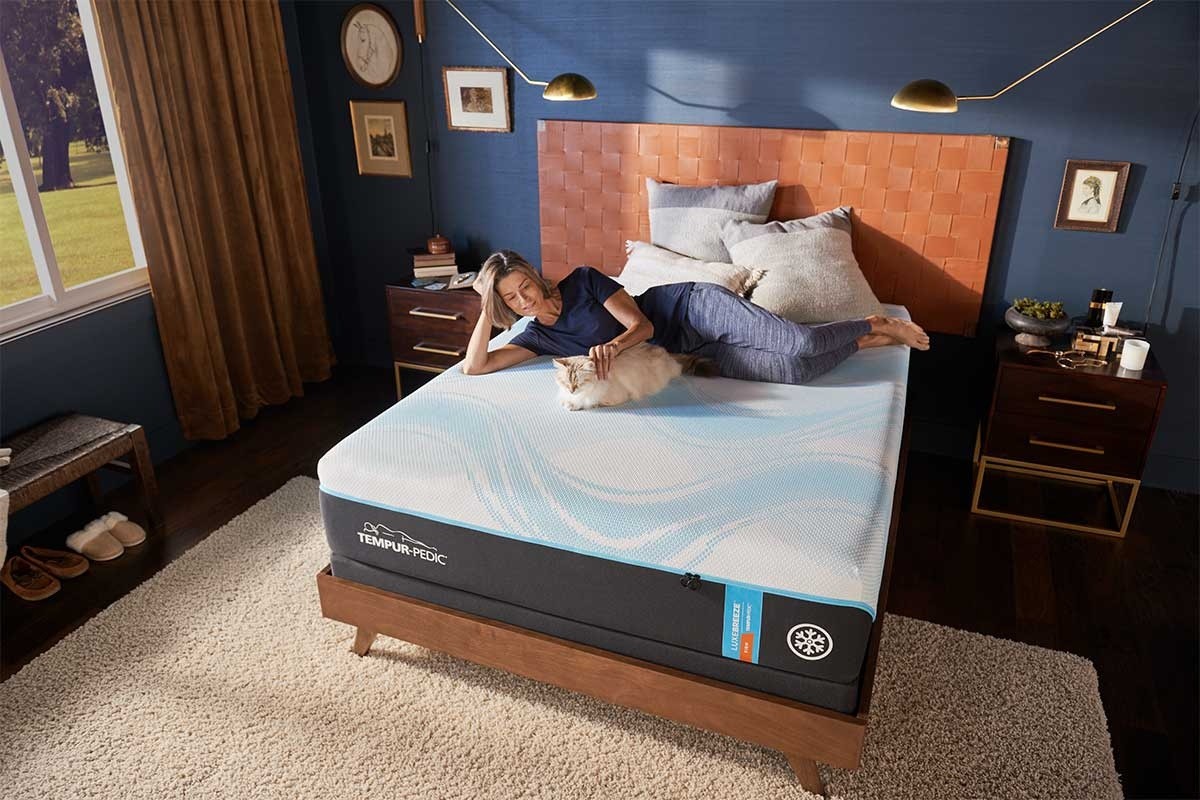
Your mattress can also make a difference. For a cooling-focused option, the TEMPUR-Breeze® Collection may be appealing since it’s designed to help you sleep cooler. The TEMPUR-ProBreeze® could be a great choice if you want the pressure-relieving comfort of TEMPUR-Material® with added cooling. The TEMPUR-LuxeBreeze®, however, offers Tempur-Pedic®’s most advanced cooling technology for sleepers who run especially warm.
The right pillow can help, too. Since heat can typically build around the neck, a cooling pillow may make your sleep setup feel more comfortable. The TEMPUR-Cloud® Dual Cooling™ Pillow for example is designed with cooling gel on both sides and adaptive TEMPUR-Material® support, making it a good option if you want a cooler feel without sacrificing comfort.
Sheets are another important part of your sleep setup. TEMPUR-Pedic® Rayon from Bamboo sheets are made with natural moisture-wicking qualities, which are designed to reduce that damp, clammy feeling.
A few mindful changes can help your bed feel more comfortable when night sweats happen. While they may not prevent every hot flash, breathable sheets, cooling-focused mattress materials, supportive pillows, and a cooler room can all work together to help you settle back in more easily and wake up feeling more rested.
A Note from Tempur-Pedic®: This content is for informational or general educational purposes only and does not constitute individualized advice. It is not intended to replace professional medical evaluation, diagnosis, or treatment. Always seek the advice of your physician for questions you may have regarding your sleep quality and overall health.
Additionally, we love sharing tips to help you achieve better sleep. While we strive to provide objective, industry-standard insights, we also design and manufacture products to address specific sleep challenges.
Breathable bedding made with naturally moisture-wicking materials, such as bamboo sheets, may help minimize the perceived effects of night sweats.
A mattress designed with cooling features could help reduce the impact of night-time hot flashes.
A cool room with low humidity could help with night sweats, especially if paired with light-weight pajamas, breathable/moisture-wicking sheets, and a cooling mattress and pillow.
"Night Sweats: Menopause, Other Causes & Treatment.” April 28, 2026. Published by Cleveland Clinic. Read the article. Full URL: https://my.clevelandclinic.org/health/symptoms/16562-night-sweats This article explains that night sweats are episodes of excessive sweating during sleep and discusses their causes, including menopause, medical conditions, medications, and sleep environment factors.
"The Truth About Night Sweats in Menopause." Published by The Menopause Network. Read the article. Full URL: https://www.themenopausenetwork.co.uk/symptoms/the-truth-about-night-sweats-in-menopause#introduction This article explains that night sweats are one of the most common symptoms of menopause and are caused by hormonal fluctuations that affect the body's temperature regulation.
You’re using an unsupported web browser.
A list of the most popular browsers can be found below. Just click on an icon to visit the download page.
Your phone or tablet is using software unsupported by our website. To improve your shopping experience, please update your device to the latest version of iOS or Android OS.


